A Canada-wide university collaboration co-directed by INRS receives $3 million
MONTRÉAL, Dec. 5, 2022 /CNW Telbec/ - Active transportation and public transit are essential to improving the overall health of a population. Yet in many Canadian cities, car use remains predominant. Unless major changes are made to infrastructure and behaviour, cities will struggle to meet the ambitious sustainable transport goals set in response to urban congestion and the climate crisis.
A pan-Canadian research team, co-directed by Professor
Its goal? Improving population health in urban areas. These funds, provided by the Canadian Institutes of Health Research (CIHR) through the Institute of Population and Public Health, will support the
"Active transport and public transit are key solutions to ensuring healthy cities. Pedestrian and cyclist travel is currently restricted partly due to concerns about safety and routes' user-friendliness, as well as elements related to the lack of infrastructure for these modes of transport in our cities," says Marie-Soleil Cloutier, Lead co-researcher of CapaCITY/É.
"Our research will be used to advance the implementation science by studying multiple dimensions of municipal interventions related to sustainable transportation," adds the health geography and urban studies researcher.
This announcement is part of a
Sustainable transport for health and equity in cities
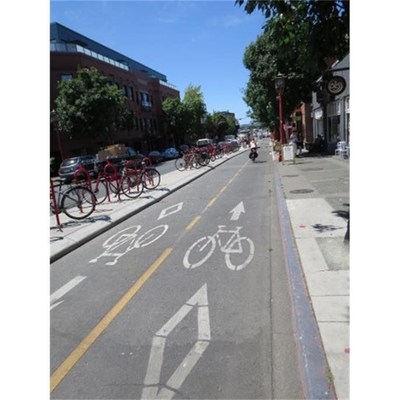
The CapaCITY/É project, jointly led by Meghan Winters of Simon Fraser University, Daniel Fuller of the University of Saskatchewan, and Marie-Soleil Cloutier at NRS, focuses on two key interventions: All Age and Ability (AAA) bicycling networks, and speed reduction strategies – used as case studies.
This project comes at an important time, with the federal government launching its first
CapaCITY/É is an initiative involving multiple Canadian universities, with the following co-principal investigators: Anne Harris (Toronto Metropolitan University), Andrew Howard (The Hospital for Sick Children), Yan Kestens (Université de Montréal), Alison Macpherson (York University), Sarah Moore (Dalhousie University), Linda Rothman (Toronto Metropolitan University), Martine Shareck (Université de Sherbrooke), and Jennifer Tomasone (Queen's University).
"A project of this scope requires a wide range of expertise from across the province and the rest of the country. Taking into account many different urban environments across Canada is essential to the success of this project," says Marie-Soleil Cloutier.
The project research team will work in partnership with urban planners, community groups and other stakeholders in several Canadian cities (Halifax, Montreal, Toronto, Victoria, among others). The project proposes to examine how targeted, city-funded interventions lead to real changes in the urban environment and mobility patterns, as well as improved safety for users.
About INRS

 View original content to download multimedia: