- Home
- Agriculture, environment and natural resources
- Mining
- Mine site reclamation
- Reclamation of an abandoned mine site
- Examples of restoration of mining sites
Examples of restoration of mining sites
Barvue Mine
The former Barvue mine site is located in the Abitibi-Témiscamingue region. The mine operated between 1952 and 1957. It has produced more than five million tonnes of zinc and silver ores associated with lead and arsenic.
The tailings were stored on site and surrounded by containment dykes. In the 1950s, while the site was in operation, a breach in the dyke resulted in a significant release of tailings into two streams, Ruisseau Marcotte and Rivière Laflamme.
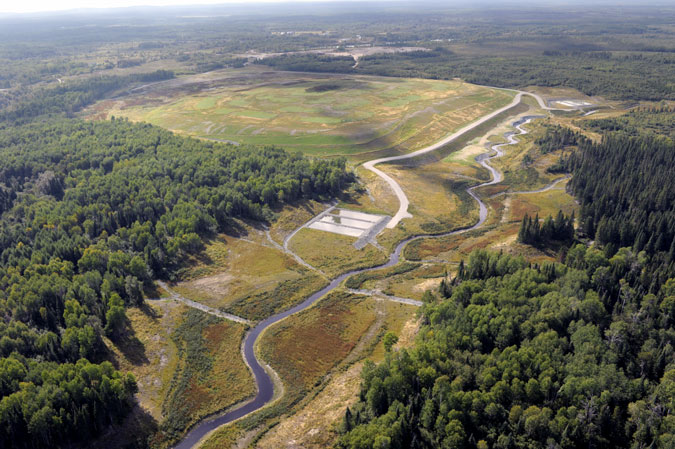
The government carried out reclamation work between 2011 and 2016. The work included:
- stabilization and reshaping of the containment dyke in the taillings storage facility;
- partial diversion of Ruisseau Marcotte;
- excavation of 400,000 m3 of mine tailings from the banks of Ruisseau Marcotte;
- creation of two water retention ponds;
- installation of a multi-layer cover with geomembrane to limit water and oxygen infiltration into tailings, thereby reducing processes for oxidation of tailings;
- revegetation of the entire site using fertilizing residual materials;
- installation of instrumentation for post-reclamation environmental monitoring.
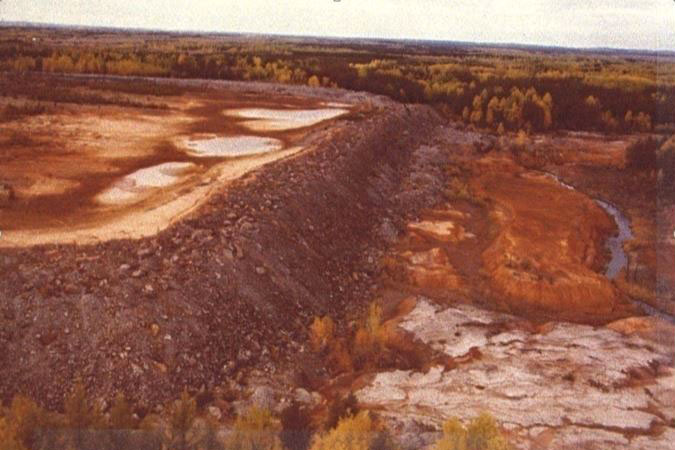
Photo before reclamation (1978)
Lac Renzy Mine
The former Lac Renzy mine site operated between 1969 and 1972 for copper and nickel. The mine was shut down abruptly and ore, waste rock, tailings and contaminated soils were left on site.
The government carried out site reclamation from 2018 to 2024. The work included:
- flooding the tailings and waste rock under one metre of water in the lake to limit the potential for acid mine drainage generation;
- construction of a dam to maintain an optimal water level above the tailings;
- treatment of petroleum hydrocarbon-contaminated soils using on-site biopiles, followed by containment of these soils in a sealed cell;
- excavation and transportation of xanthate-contaminated soil to an authorized treatment facility;
- integration of the site into the surrounding natural environment.
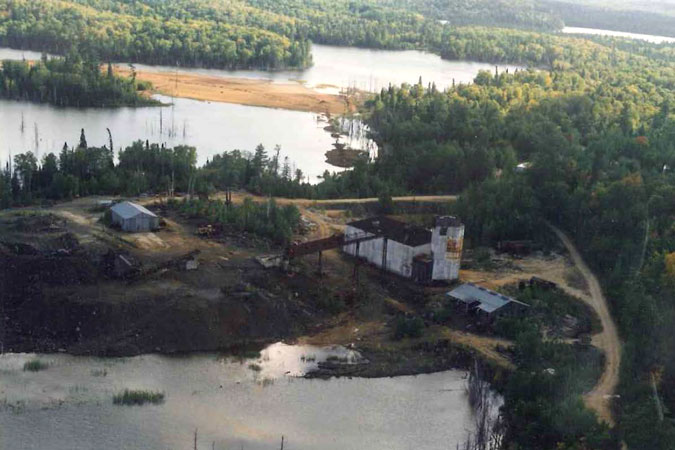
Photo before reclamation (1990)
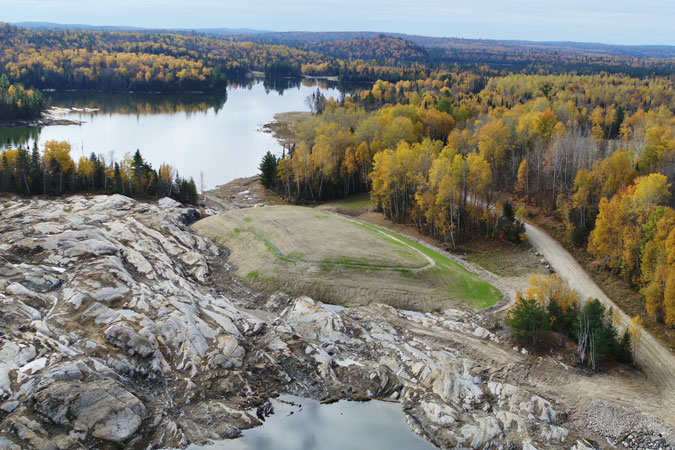
Regular follow-up
Since their reclamation has been completed, these sites are regularly monitored to ensure that reclamation measures remain effective and that the sites are safe.
See also
Last update: March 5, 2026