Intervening quickly
When a person is overdosing, their overall condition changes. They can stop reacting to their surroundings and lose consciousness.
If you suspect that someone is overdosing:
1. Check for signs of an opioid overdose.
- The person does not respond to sound or pain.
- Their breathing is laboured or snore-like, or they are not breathing.
If the person seems to be unconscious, try making them respond to sound or pain:
- Yell their name and talk to them loudly.
- Rub the centre of their chest (sternum) hard.
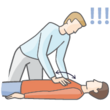
2. If the person is unresponsive, call or have someone call 911.

The Good Samaritan Drug Overdose Act is a Canadian federal measure aimed at getting people to call for help in overdose situations without fear of immediate legal consequences. This Act aims to protect people who experience or witness an overdose. When calling 911 for emergency help, neither the intoxicated individual or yourself, whether or not you have also used drugs, can be charged with possession of controlled substances or violation of legal conditions related to the possession of illegal substances.
3. Give a first dose of naloxone to the intoxicated person.
Naloxone is available in two forms:
- nasal spray
- injectable solution
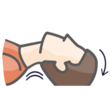
2. Remove the nasal spray from the box. Don’t test it.
3. Hold the device with your thumb under the plunger. Place your index and middle fingers on either side of the spout.
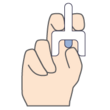
4. Gently insert the tip of the spout into one nostril. Your fingers should be right up against the nose.
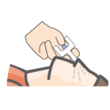
5. Press firmly on the plunger with your thumb to administer the dose.
6. Remove the device from the nostril.
Watch the video
Disclaimer: the video player is YouTube’s and may have some accessibility barriers. You can skip to the content after the video
Disclaimer: the video player is YouTube’s and may have some accessibility barriers. You can skip to the content before the video.
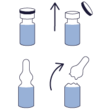
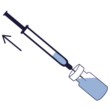
3. Inject the naloxone into a muscle of the intoxicated person, such as their thigh or shoulder, keeping the needle and syringe at a 90-degree angle to the limb. The injection can be done through light clothing.
Watch the video
Disclaimer: the video player is YouTube’s and may have some accessibility barriers. You can skip to the content after the video
Disclaimer: the video player is YouTube’s and may have some accessibility barriers. You can skip to the content before the video.
4. If the person is unresponsive, perform one of the following manoeuvres.
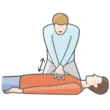
- Cardiopulmonary resuscitation (CPR): Do CPR, if you know how, and use the barrier mask the barrier mask with a one-way valve.
- Otherwise, perform chest compressions: give 2 compressions (5 cm deep) per second until help arrives or until the person shows signs of waking up.
5. If the person is unresponsive after 2 to 3 minutes, give them a second dose of naloxone.
- If you used intranasal naloxone, administer the dose in the other nostril.
- If you used injectable naloxone, use a new container.
- Repeat CPR or chest compressions as long as the person is unresponsive. Stay with them until the paramedics arrive, even if they regain consciousness.
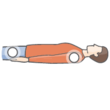
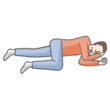
6. If the person wakes up, lay them on their side.
- Explain what just happened.
- Explain how it’s important that they be seen by a health professional.
- Tell the person that they should not use opioids in the next few hours to avoid another overdose.
- Stay with them until the paramedics arrive.
Since the effects of naloxone last only a few minutes, there is a risk of a relapse of overdose symptoms. If the person starts overdosing again, give them another dose of naloxone using a new container. The intoxicated person must be taken to the hospital right away for observation and treatment.
Actions to avoid
When someone is overdosing on opioids:
- Do not delay giving them the naloxone.
- Refrain from performing CPR if they are conscious.
- Don’t leave them alone.
- Don’t give them other drugs.
- Don’t make them take a cold bath or shower.
- Don’t hit them to try to make them regain consciousness.
- Don’t inject a saline solution into their veins.
Using naloxone
Naloxone is an opioid-specific antidote. It temporarily reverses the effects of an opioid overdose while being safe and harmless to health, regardless of whether the person to whom it is administered is intoxicated with opioids or not.
Injectable naloxone
Wait until you are using the syringes to fill them.
Make sure you dispose of syringes and needles safely. To learn more, visit the page Recovery of used syringes and needles. You can also give them to the paramedics.
Obtaining naloxone
Naloxone is available free of charge and without a prescription at any pharmacy and in some community organizations in Québec.
When a person wishes to purchase naloxone from a community pharmacy for potential use on a third party, they must inform the pharmacist so that the information can be properly noted in their file.
For naloxone in injectable form, ampoules and vials are provided with retractable needles and syringes, alcohol wipes and gloves.
To find pharmacies and community organizations near you that keeps naloxone in stock, visit the page Find a resource offering naloxone.
Storing naloxone
Naloxone should be stored in a cool, dark place until its expiration date. Avoid leaving it in the cold, as it may freeze.
Useful links
- Possible Opioid Overdose: What to do - Administration of naloxone by injection
Ministère de la Santé et des Services sociaux - Possible Opioid Overdose: What to do - Nasal administration of naloxone
Ministère de la Santé et des Services sociaux - Find a resource offering naloxone
Répertoire des ressources en santé et services sociaux
Last update: January 26, 2026