1. Home  
  2. News  
  3. Moving a raccoon? What a bad idea!

Moving a raccoon? What a bad idea!

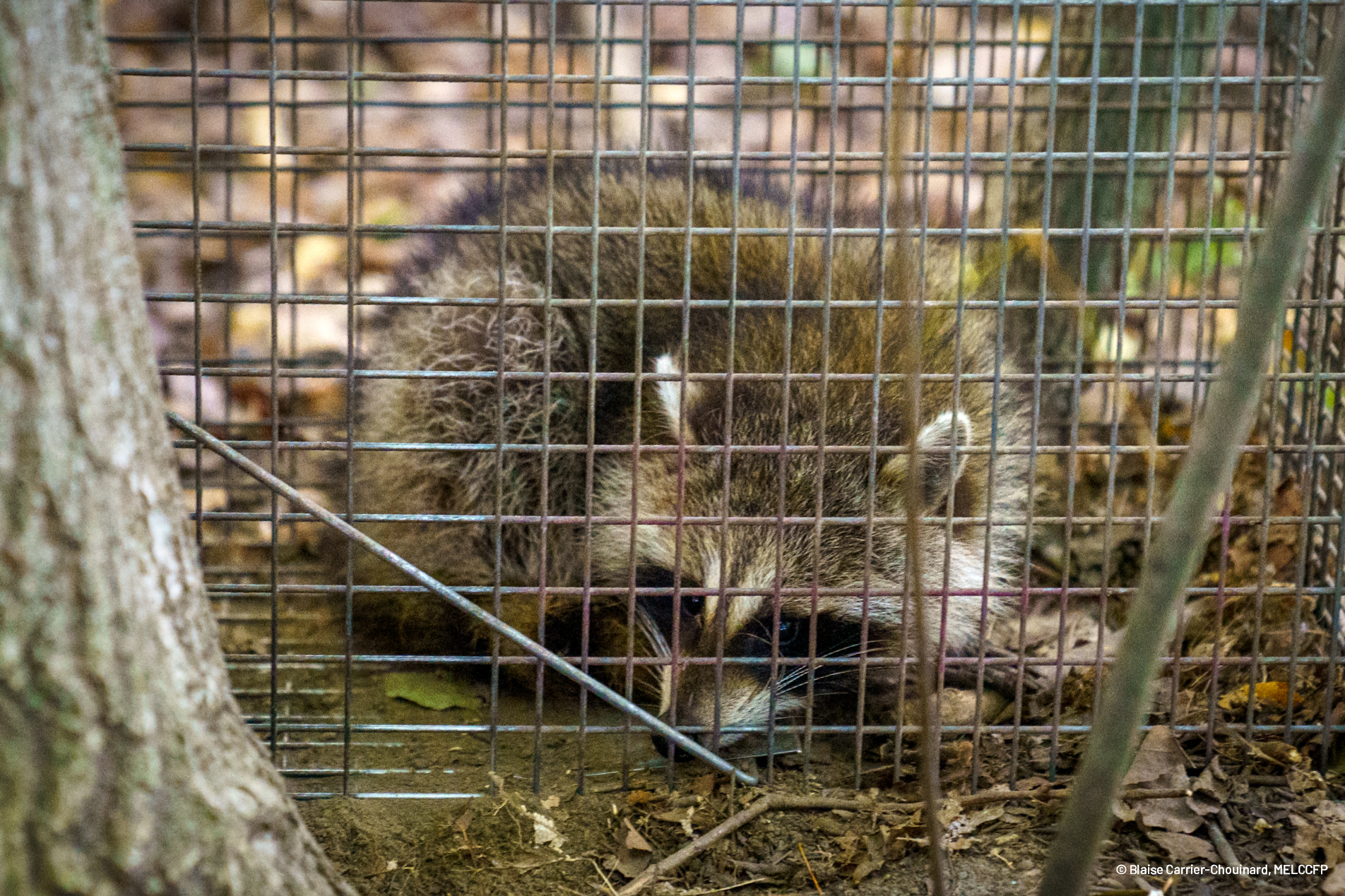
Moving a wild animal from one place to another is not without consequences. It’s not just the little critter that gets relocated, but all its baggage… like rabies!

Raccoon rabies, which mainly affects raccoons, skunks and foxes, can be controlled. Using their knowledge of animal behaviour, biologists can target intervention areas to limit the spread of raccoon rabies. This allows the government to carry out targeted vaccination operations that take into account the environmental features that limit the natural dispersal of wild animals. However, human intervention can compromise these efforts. 

Raccoon rabies, which mainly affects raccoons, skunks and foxes, can be controlled. Using their knowledge of animal behaviour, biologists can target intervention areas to limit the spread of raccoon rabies. This allows the government to carry out targeted vaccination operations that take into account the environmental features that limit the natural dispersal of wild animals. However, human intervention can compromise these efforts. 

When someone moves a nuisance animal, or an animal they want to “help", to an area free of raccoon rabies, that’s where things get complicated for biologists! Because people themselves contribute to spreading rabies over a large area by moving raccoons, skunks and foxes. Even if relocating a raccoon a few kilometres away seems harmless, or even useful for resolving a cohabitation problem, this action can have far-reaching consequences. Once removed from its home territory, that raccoon may travel many more kilometres to find a new suitable place to settle, and spread rabies... far beyond the area where it originated. 

In short, to keep things simple, never move a small wild animal like a raccoon. It’s simple: if the idea crosses your mind, don’t do it. 

Animal relocation prohibited in Estrie and Montérégie

It is prohibited to move or relocate live raccoons, striped skunks, gray and red foxes, as well as coyotes and their hybrids, within the territory of municipalities (PDF 294 Kb) located in Estrie and Montérégie. The rehabilitation of animals illegally transported is prohibited.

Anyone who fails to comply with this prohibition is liable to a fine ranging from $1,000 to $25,000 for a natural person, and from $2,000 to $50,000 in other cases (e.g., a business). 

But what if the animal is a nuisance?

An animal that appears healthy can carry the rabies virus. When faced with a nuisance animal, preventive and deterrent measures (in French only) can be taken. Don’t be the cause of your own problem by attracting small wildlife — for example, with food, open garbage bins, or easy access  to areas around your home or even inside your buildings.

Moving a nuisance animal off your property without eliminating the food sources and shelter that attract wildlife solves nothing. The animals will inevitably return to your property.  

However, you can contact a trapper or a pest management specialist who may be able to advise you. As a last resort, the nuisance animal can be killed, of course in compliance with the applicable laws and regulations. No permit is required in this type of situation. It is recommended to use the euthanasia method for animals captured using a cage (PDF 1.74 Mb) (in French only) in compliance with international humane trapping standards.

Rabies is deadly. It can affect wild animals, pets… and humans.

To learn more about the fight against raccoon rabies, visit the Raccoon rabies surveillance and control operations page.

Last update: July 2, 2026