Description
In Quebec, colorectal cancer, also known as colon and rectal cancer, is the second leading cause of cancer‑related deaths in men and the third leading cause of cancer‑related deaths in women. It forms in the large intestine (colon) or at its end (rectum).
Colorectal cancer develops slowly, without any apparent symptoms, and usually from polyps. Polyps are small, benign (non‑cancerous) masses of flesh that gradually enlarge on the inner walls of the colon or rectum. Most polyps will remain benign, with no consequences, but some can develop into cancer. It can take years for a polyp to develop into cancer. A person can have a precancerous polyp or even colorectal cancer for years before they have symptoms.
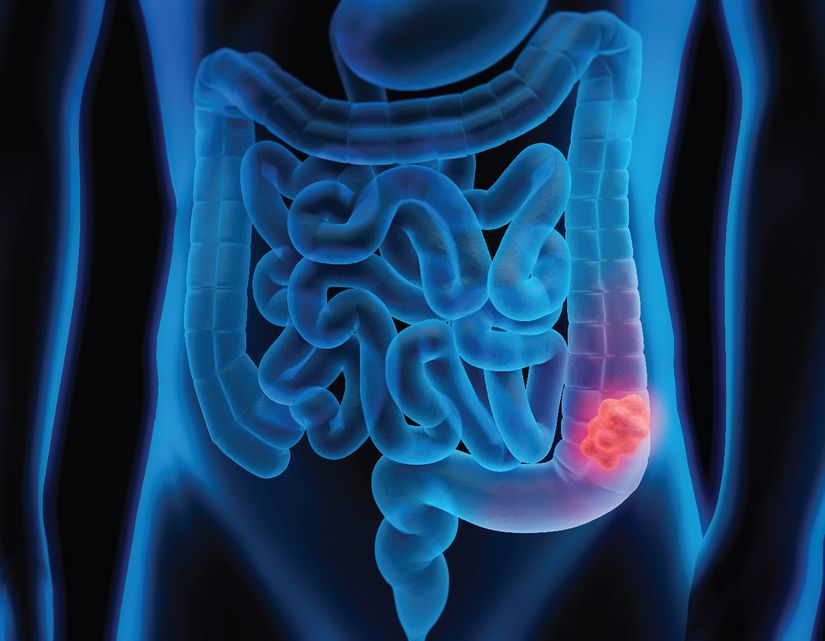
Depiction of part of the digestive system. Polyps or colorectal cancer (in red) may develop in the large intestine
Risk factors
Certain factors increase the risk of developing colorectal cancer. Having a risk factor associated with this type of cancer does not mean that you will have the disease. Some people may also develop this type of cancer without having any risk factors.
Age, especially after the age of 50, is one of the main risk factors for developing colorectal cancer. Regardless of their age, some people, owing to their personal history (e.g., history of colorectal cancer or polyps, inflammatory bowel disease such as ulcerative colitis or Crohn’s disease, genetic syndrome) or family history (e.g., cases of colorectal cancer or polyps in the family, familial genetic syndrome), have a higher risk of developing colorectal cancer.
People at risk can discuss the most appropriate screening test for their personal situation with a health professional. Some people may be referred for a specialty consultation and follow‑up if necessary.
Symptoms
Colorectal cancer can develop slowly, without any apparent symptoms. If you notice a recent and persistent change in your bowel habits (e.g., diarrhea, constipation, black or bright red stools or bleeding after bowel movements), consult a physician or specialized nurse practitioner quickly to get a diagnosis.
When to consult a health professional?
Call Info‑Santé 811 or consult a doctor or a specialized nurse practitioner if you have any of the symptoms described above. Note that these symptoms are not necessarily caused by cancer. They may be caused by another health problem.
Healthy lifestyle
The best way to reduce your risk of colorectal cancer is to adopt healthy lifestyle habits :
- adopt a tobacco‑free lifestyle;
- maintain a healthy weight
- be physically active;
- limit your sedentary time (e.g., screen time);
- increase your consumption of fruits, vegetables, whole grains, legumes and dairy products;
- limit your consumption of processed meat (for example, cold cuts) and red meat;
- avoid alcohol or reduce your alcohol consumption.
Screening
Colorectal cancer screening is another effective way to reduce the risk of developing this disease and its mortality. A health professional may recommend, if you are eligible, a FIT or a colonoscopy, depending on your level of risk. A FIT detects the presence or absence of blood in the stool that is invisible to the naked eye. If the test is positive, the person can be referred for a colonoscopy. A colonoscopy provides a view of the inside of the large intestine and allows polyps or cancer to be detected at an early stage, before the signs and symptoms of the disease appear.
Cancer screening has advantages, disadvantages and limitations. People who are eligible can decide whether or not to participate based on their values and preferences. Screening is an option, but never an obligation. Visit the colorectal cancer screening page to learn more.
Treatments
When someone is diagnosed with colorectal cancer, an oncology team establishes a personalized treatment plan with them. The plan may vary depending on different factors, such as the type of cancer, the stage and the person’s health. The treatment plan also takes into account the person’s wishes and concerns and those of their family.
When cancer affects the large intestine, the main treatments offered are surgery and chemotherapy. Radiation therapy may also be indicated sometimes. The doctor may prescribe only one of these treatments or a combination.
Last update: August 19, 2024