

 Back to
Profile of the Nations
Back to
Profile of the Nations
Population and territory
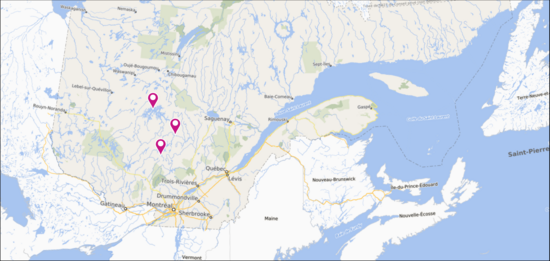
The Atikamekw, with a population of approximately 8,379, live mainly in Manawan, in the northern part of the Lanaudière region, as well as in Wemotaci and Obedjiwan, in the Haute-Mauricie region.
Explore the
Watch the videos.
Disclaimer: the video player is YouTube’s and may have some accessibility barriers. You can skip to the content after the video

Disclaimer: the video player is YouTube’s and may have some accessibility barriers. You can skip to the content before the video.
Language
Atikamekw (Nehirowimowin) Read the content of the note 1 is spoken by the entire population, while French is used as a second language.
History
In the early 1900s, industrialization led to the intensive exploitation of the forests in the areas where the Atikamekw lived. The first sawmill opened in La Tuque, leading to the railway being extended to Wemotaci and then to Abitibi. Train service resulted in an influx of workers, hunters and fishers to the Mauricie region. In addition, the Atikamekw moved several times between 1950 and 1972 due to the construction of dams.
Economy
Atikamekw Sipi - Conseil de la Nation Atikamekw was founded in 1982 and is dedicated to the social, cultural and economic development of the three Atikamekw communities. Through this organization, the Atikamekw deliver and manage social services in Manawan and Wemotaci. In addition, the organization produces educational material in the Atikamekw language.
The Atikamekw advocate sustainable development through comprehensive resource management with all those who use the forest for social, environmental and economic purposes. In Wemotaci, they created the Services forestiers Atikamekw Aski, which carries out reforestation and silviculture activities and trains Atikamekw workers.
In 1999, the Opitciwan band council, along with forestry company AbitibiBowater, became co-owners of a sawmill located on the community’s land. Today, the Opitciwan Sawmill is a joint venture, which is 55% owned by the Opitciwan Atikamekw Council and 45% owned by Resolute Forest Products.
-
Footer note number 1Each Indigenous nation has its ancestral language, which may be divided into several dialects. Furthermore, the names of ancestral Indigenous languages are drawn from the the
document regarding bill 96 , presented by the Assembly of First Nations Quebec-Labrador on September 28, 2021. Back to the reference of the note 1
Last update: May 9, 2025